
April 2026 Crude Oil Supply Cuts and What They Mean for Global Lubricant Supply Chains
The Strait of Hormuz is, for now, effectively closed. This single sentence explains why your inbox is full of supplier emails about “force majeure,” why your current lubricant quotes are expiring faster than usual, and why some brands you’ve been ordering for years have suddenly gone quiet on delivery timelines.
1 The Market Situation in Numbers
Brent crude averaged $103 per barrel in March 2026, $32 higher than February’s average. Daily prices hit nearly $128 per barrel on April 2. As of mid-April, Brent has pulled back to around $95 per barrel, but remains roughly 40% higher than a year ago.
Physical crude oil prices surged to record levels near $150 per barrel at peak disruption, far above futures market prices.When physical crude trades significantly above futures pricing, it indicates:
- Immediate refinery feedstock pressure
- Short-term supply shortages
- Rapid changes in downstream production cost
For lubricant manufacturers, this translates directly into higher base oil replacement cost within weeks—not months.

2 Production adjustments in key exporting regions
Iraq took the biggest production hit, with output collapsing 61% from 4.2 million barrels per day in February to 1.6 million bpd in March. Kuwait fell 53%, the UAE 44%. Even Saudi Arabia, OPEC’s largest producer, dropped 23% from 10.1 million bpd to 7.8 million bpd.
Overall, OPEC production fell 27% month-over-month, from 28.7 million bpd to 20.8 million bpd.
To put that in perspective: 8 million barrels per day of supply simply vanished. That’s roughly equivalent to taking the entire oil output of Russia off the market overnight.

3 How This Reaches Your Lubricant Order
- Step 1 — Base Oil Tightening.
When crude input costs rise and refinery margins compress, base oil output is often reduced first. Group II and Group III base oils are refined from crude. When Middle Eastern and European refineries cut runs , Group III supply tightens fast. Group III is in every synthetic engine oil you sell. - Step 2 — Additive Supply Constraints.
Many performance additives are petrochemical derivatives. The same disruption that hits crude hits additive feed stocks. Lead times are extending by 4–8 weeks across the industry. - Step 3 — Logistics and Freight Volatility.
Middle distillate prices in Singapore reached all-time highs above $290 per barrel. Vessels rerouting around the Cape of Good Hope add 20–30 days to transit times and significantly inflate freight insurance costs. - Step 4 — Financing and Inventory Pressure
Banks are tightening credit lines for energy-sector trade, particularly for smaller brands with thin margins. Brands that relied on short-term financing for inventory are now struggling to maintain stock levels. As a result, supply reliability is becoming more important than unit price.
4 Who Is Most Affected
Lubricant brands and distributors who are feeling this most acutely tend to share a few characteristics:
- Dependence on imported base oils from multiple regions
- Operating on lean inventory (30 days or less)
- Working with suppliers who haven’t secured long-term raw material contracts
- High reliance on spot pricing or short-term procurement
- Relying on letter-of-credit financing for large orders
If your current supplier ticks more than two of these boxes, the “force majeure” email has been received.
5 Why China's Production Current Supply Stability
China’s downstream refining and storage system has played a stabilizing role in the current cycle.China expanded its strategic crude oil reserves during the first two months of 2026, adding 1.24 million barrels daily to storage, supported by elevated import volumes and increased domestic output. As of 2026, China is estimated to hold the largest strategic petroleum reserves in the world, totaling 1.3 billion barrels.
Key structural advantages include:
- Large-scale integrated refining capacity
- Strong domestic base oil production clusters (especially East and South China)
- Flexible allocation between export and domestic demand
- Established logistics infrastructure for bulk chemical distribution
This does not eliminate global price pressure—but it provides a more controlled supply environment compared to more fragmented importing regions. For lubricant buyers, this means: China-based sourcing can offer higher predictability in supply continuity during global volatility cycles.
6 What Buyers Should Be Asking Right Now
Instead of focusing only on price per ton, procurement teams should evaluate supplier resilience.
A more relevant question is: Where is your base oil sourced, and what is your secured inventory coverage today?
A transparent supplier should be able to provide:
- Origin of base oil supply
- Inventory coverage window
- Production lead time under current conditions
- Backup sourcing strategy

7 About TERZO Lubricants
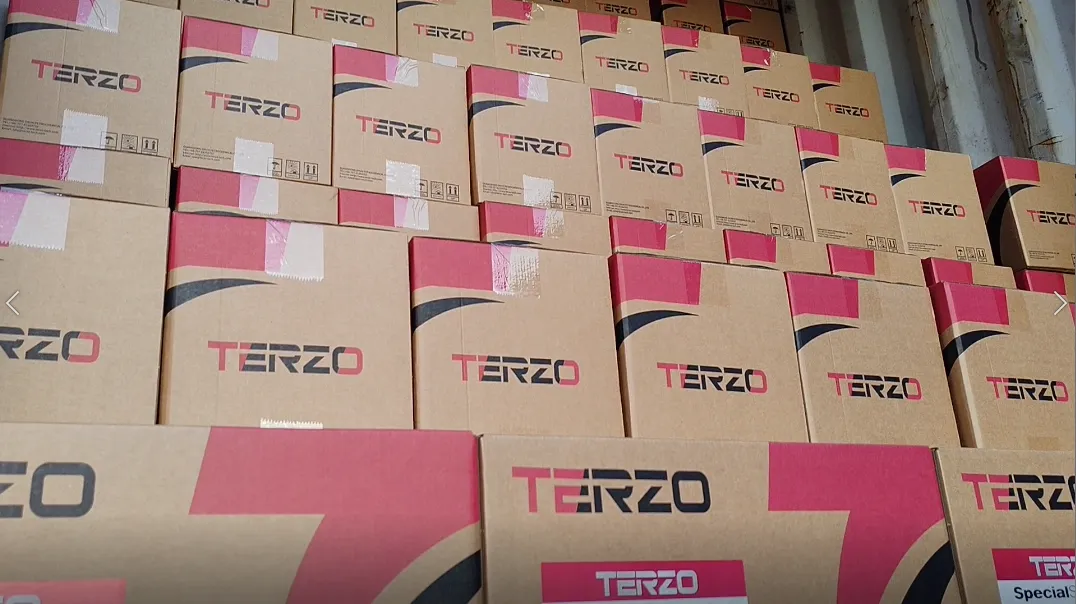
TERZO Lubricants is a Guangdong-based manufacturer supplying lubricant distributors, OEM brands, and industrial fleet operators across more than 50 countries. We focus on stable production capability, controlled sourcing, and transparent supply chain communication to help partners operate in volatile market conditions.
If you need a supply chain review or sourcing consultation, our team can support technical and procurement evaluation.