
潤滑劑採購成本:為何較低價格反而會降低利潤?
較低的 潤滑劑採購成本 這雖能讓報價更具競爭力,但發票上顯示的節省金額僅是商業成果的第一部分。唯有當產品送達經銷商、維修廠、車隊及終端用戶手中後,真正的獲利能力才會顯現。.
什麼會導致最初的儲蓄歸零?
- 投訴與更換 這會產生額外的配送、檢測及補償成本。.
- 滯銷商品與反覆折扣 這些因素會削弱現金流並壓縮利潤率。.
- 技術上的不確定性與重複訂單量低迷 這會削弱銷售團隊和客戶的信心。.
價格較低並不一定代表品質較差。真正的省錢之道可以來自 規模、自動化、標準化包裝、高效的原料採購,以及更完善的物流. 一項最近的 潤滑油產業的投入成本分析 這也顯示,成品油的定價受到基礎油、添加劑、運費及包裝等因素的影響——並非僅由單一投入因素所決定。.
關鍵問題不在於報價是否偏低,而在於為何會偏低。. 買方應釐清此優勢究竟源自營運效率,還是源於降低配方品質、檢測、生產控制、文件記錄、包裝強度或售後支援。.

1. 究竟是什麼因素決定了潤滑油的價格?
成品潤滑油並非單純將基礎油裝入瓶中即可。其價格反映了所使用的原料、配方開發方式、生產過程中的品質管控,以及為確保穩定供應所需提供的技術與商業支援。.
主要成本組成部分通常包括基礎油、添加劑技術、配方開發、性能測試、生產控制、包裝、文件編製以及出口支援。這些因素綜合起來,既會影響供應商的報價,也會影響產品上市後的性能表現。.
基礎油結構
基礎油通常佔成品潤滑油的相當大比例。其類型、品質及調配結構,會影響潤滑油在不同溫度下的性能表現、抗氧化與抗揮發能力,以及在使用過程中維持黏度的效能。.
因此,兩款標示為相同 5W-30 黏度等級的潤滑油,未必完全相同。.
這兩款產品在作為新油進行測試時,或許都能符合黏度要求,但其基礎油結構可能截然不同。這些差異在使用過程中,會透過機油消耗量、冷啟動性能、氧化穩定性、黏度保持能力,以及能否支撐預定的換油週期等表現,變得更加明顯。.
黏度等級用以說明機油在特定溫度範圍內的流動特性。它並不能全面反映機油配方品質、耐久性或適用性。.
添加劑系統
添加劑系統是配方中的另一項重要組成部分。引擎機油通常含有經均衡配比的清潔劑、分散劑、抗磨劑、抗氧化劑、黏度調節劑、低點降點劑、防腐劑及消泡劑。.
添加劑濃度越高,並不一定代表機油就越好。. 添加劑組合必須能與所選基礎油相容,並符合引擎類型、運作環境、所需性能水準及預期保養週期。.
有時可透過降低添加劑的添加量,或選用並非完全適合預期應用情境的添加劑組合,來降低成本。新油在基本測試中可能仍看似符合標準,但差異可能會在後續實際使用中顯現。.
在換油週期的尾聲,機油可能會較早喪失清潔能力、氧化速度加快,或無法提供同樣穩定的抗磨保護與黏度控制。.
若僅以價格、黏度等級及簡短的規格清單作為比較依據,這些差異便難以辨別。.
配方開發與性能宣稱
潤滑油標籤上的性能聲稱應有相應的技術證據作為依據。然而,買家也需了解,標籤上使用的每句話所代表的驗證程度並不盡然相同。.
在快速比較產品時,「經核准」、「符合或超過」、「建議用於」及「適用於」等術語看似相似,但它們可能代表不同類型的技術支援。一個 油品社群關於核准與績效表述的討論 這顯示,即使是經驗豐富的潤滑劑使用者,也經常會質疑該如何解讀這些說法。.
這並不意味著每種未經正式 OEM 核准的產品都不適合使用。某些配方即使未完成特定製造商的核准程序,仍可能有公認的性能測試、添加劑供應商資料或其他技術證據作為依據。.
一個 業界對 OEM 潤滑油認證的說明 這說明了實際上的差異:兩種機油雖然標示的性能等級相似,但其中只有一種已完成特定汽車製造商所要求的測試與認證程序。.
對進口商和經銷商而言,目標並非選擇規格清單最長的產品。更關鍵的問題在於,這些產品宣稱的特性是否適合目標車型群、運作條件、預期保養週期以及價格定位。.
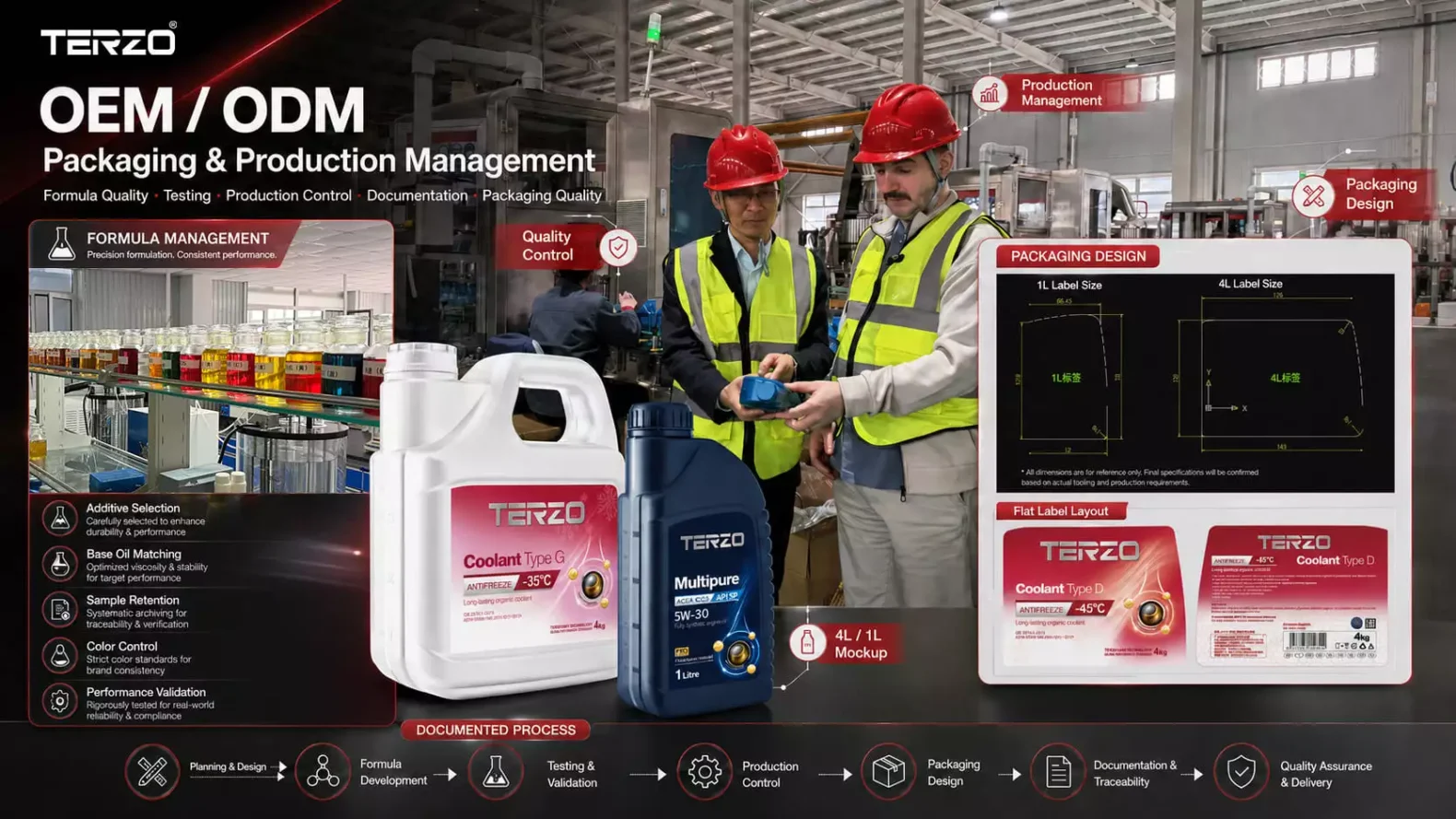
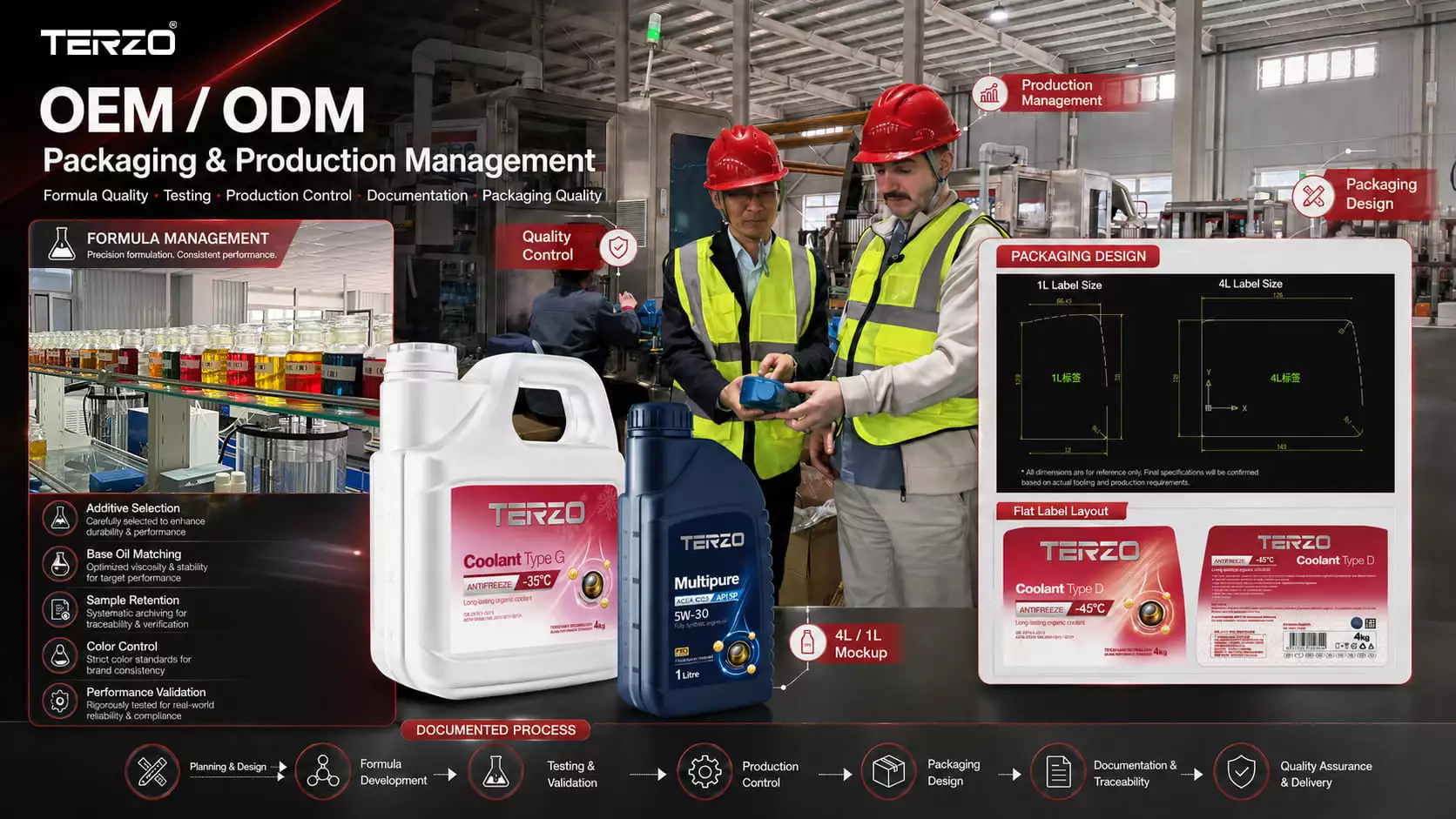
視產品及市場而定,佐證文件可能包括技術資料表、分析證明書、有效許可證資訊、原始設備製造商(OEM)核准函、實驗室檢測結果、添加劑供應商文件、配方紀錄,以及生產批次文件。.
買方亦應確認,相關文件所載的資料是否與實際供應產品的黏度等級、配方、包裝規格及生產批次完全相符。若文件所載內容屬於不同產品或較早期的配方,即使在技術上正確,其採購參考價值亦相當有限。.
目的並非要蒐集盡可能龐大的證書檔案,而是要確認所購買的產品具備適用於其預期用途的適當證明,且供應商能夠清楚說明各項性能聲明的涵義。.
生產與品質控制
潤滑劑價格中的一部分,也涵蓋了用以確保每批產品品質一致的系統。.
這些控制措施可能包括原料檢驗、混合過程監督、批次檢測、留樣、儲槽與管線清洗、灌裝精度、包裝檢驗、批次編碼,以及產品可追溯性。.
Technical documents should also correspond with the product being supplied. A TDS, SDS, or COA has limited value when it does not accurately reflect the formulation, production batch, or market version received by the buyer.
Recent industry reporting on lubricant purchasing due diligence has also highlighted the importance of checking active approvals, current product data, recent formulation changes, and written support for expressions such as “suitable for use.”
Most of these controls are not visible on the front label. Their value becomes clearer when an importer or distributor receives repeated shipments over a longer period.
A lower-priced product may perform adequately during the first order. Problems usually become more costly when batch consistency, packaging reliability, documentation, or traceability begins to vary across later shipments.
The resulting cost may appear through customer complaints, product replacements, customs delays, additional testing, or weaker confidence among distributors and end users.
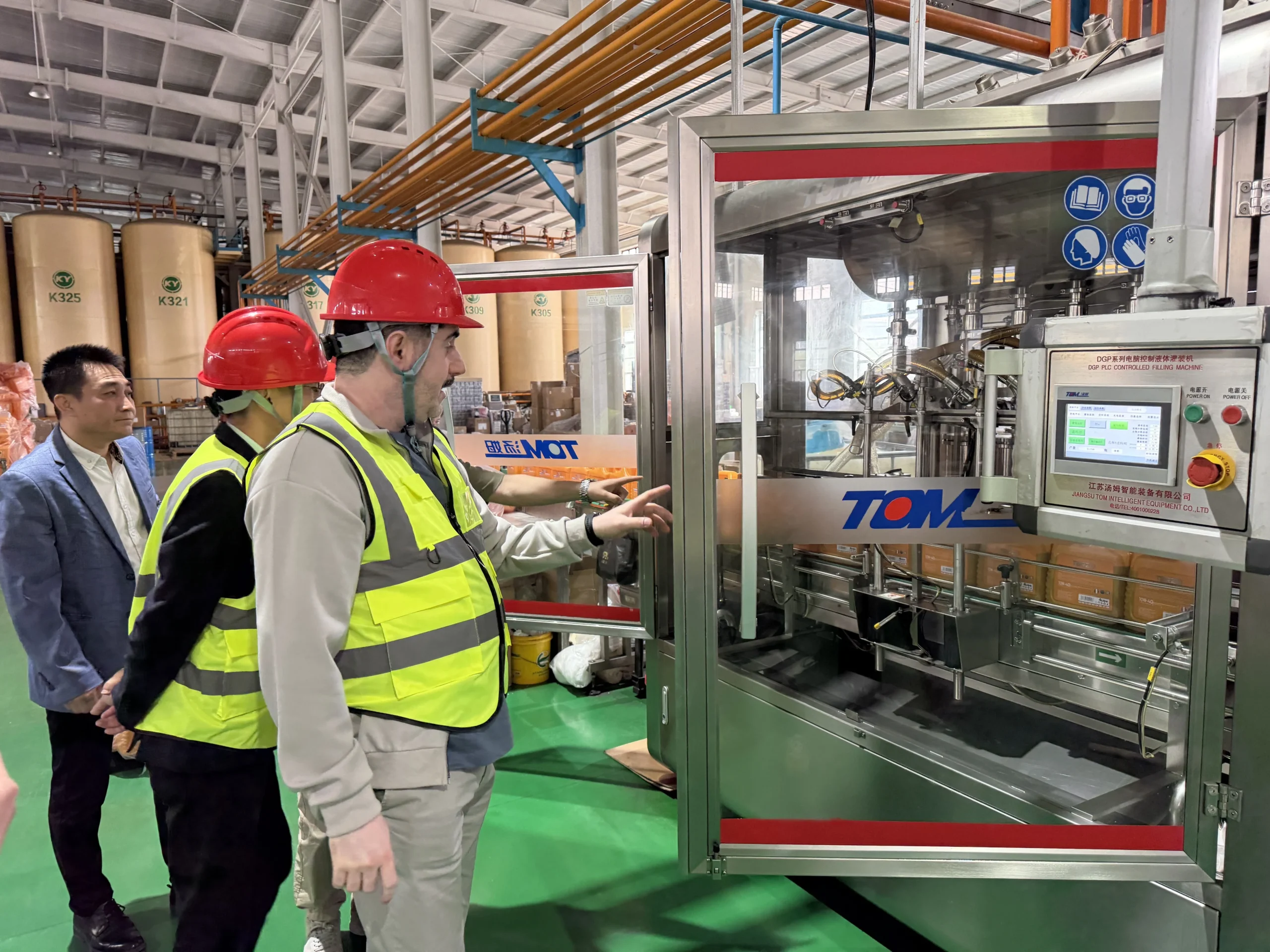
For this reason, buyers should look beyond the sales presentation. Reviewing the supplier’s factory, production process, testing procedures, document control, and traceability system can provide a clearer understanding of how the quoted price is achieved.
Buyers evaluating TERZO can also review the TERZO factory and production process before discussing product specifications, trial orders, and long-term supply planning.
When a lubricant quotation is noticeably below the normal market range, the first question should not simply be:
“Can the price be reduced further?”
A more useful question is:
“What allows the supplier to offer this price, and which parts of the product or supply process have made that cost possible?”
2. Lower Lubricant Purchase Cost: Efficiency or Risk Transfer?
A competitive quotation can be reasonable when the supplier reduces cost through larger-volume purchasing, automated blending and filling, better equipment utilization, standardized packaging, efficient warehousing, and stronger loading plans.
Those efficiencies can lower production and delivery costs without weakening the formulation. The risk begins when the supplier cannot clearly explain how the price advantage has been achieved.

Four areas deserve closer review when a quotation is unusually low:
- Base-oil route: an unsuitable combination can affect low-temperature flow, volatility, oxidation resistance, and viscosity retention.
- Additive treatment: reducing or mismatching the package can weaken detergency, dispersancy, wear protection, and shear stability.
- Testing and batch control: basic viscosity or density checks may not support every performance claim, and weak traceability makes repeat-order consistency harder to verify.
- Packaging strength: lighter bottles, thinner seals, and weaker cartons may reduce cost but increase leakage, deformation, and returns.
一個 industry overview of finished-lubricant formulation explains that base oils form most of the product while additives provide essential performance functions. This is why two oils with the same viscosity grade can still differ significantly in durability, application fit, and production cost.
Buyers should also distinguish between wording such as “approved,” “meets requirements,” “recommended for,” and “suitable for use.” A real product announcement from Castrol lists formal manufacturer approvals separately from broader “meets” statements, showing why similar-looking claims should not automatically be treated as equivalent.
A competitive price should be supported by a clear cost structure. Savings created through efficiency benefit both parties. Savings created by weakening formulation control, testing, packaging, or traceability simply transfer more operational risk to the importer or distributor.
3. Why Can a Lower Purchase Cost Reduce Distributor Profit?
The purchase cost is visible on the invoice; the later costs are spread across sales, customer service, logistics, inventory, and channel management.
A single product complaint may involve replacement stock, additional delivery costs, laboratory testing, customer compensation, and time from both the sales and technical teams. Several similar cases can quickly use up the savings created by a lower purchase price.
The impact may also extend beyond the direct cost of handling complaints.
When workshops, retailers, or fleet customers become uncertain about a lubricant, they may not stop purchasing immediately. Instead, they may ask for lower prices, free replacement stock, longer payment terms, or additional promotional support before agreeing to continue selling or using the product.
Once a product depends heavily on discounts and incentives to move through the channel, the distributor’s expected margin begins to narrow.
Sales-team confidence is another factor that is often overlooked.
Salespeople generally prefer products that are easy to explain, generate fewer after-sales issues, and lead to repeat orders. When a product becomes difficult to recommend or requires frequent clarification, sales teams may gradually shift their attention toward another brand, product line, or category.
The stock may still be sitting in the warehouse, but the people responsible for selling it may no longer feel confident presenting it to customers.
Inventory turnover also has a direct effect on profitability.
A product with a high margin per bottle but only two inventory turns per year may generate less cash than a product with a moderate margin that turns five or six times during the same period.
For distributors, annual turnover, reorder frequency, and the speed at which stock returns to cash can be more meaningful than the theoretical margin shown on a single unit.
Problems with one product can also influence confidence in the rest of the range. A dispute involving one engine oil may lead customers to question the supplier’s ATF, gear oils, coolants, diesel engine oils, motorcycle oils, other viscosity grades, or even the wider brand relationship.
| What Buyers See During Purchasing | Possible Profit Loss Later |
|---|---|
| Lower unit price | Complaints, replacements, and compensation |
| Higher expected margin | Additional discounts and promotional support |
| Lower initial order value | Slower inventory turnover and weaker cash flow |
| Lower-cost packaging | Leakage, damage, and product returns |
| Broad performance claims | More technical explanation and trust-building costs |
| Lower supplier quotation | Batch inconsistency and weaker repeat orders |
A lower purchase cost is not necessarily a bad decision. However, it should be evaluated together with the costs of selling, supporting, replacing, discounting, and restocking the product.
The real cost may not appear on the first invoice, but it can become visible over the full sales cycle.
4. Buyers Should Calculate the Total Purchasing Cost
A basic purchasing calculation usually focuses on two figures:
Quantity × Unit Price
This is useful for comparing quotations, but it does not show the full cost of bringing a lubricant into the market and selling it successfully.
For B2B buyers, a more practical calculation may include:
Total purchasing cost = product cost + logistics and inventory costs + complaints and returns + sales discounts + working-capital costs + customer loss and brand recovery
Not every buyer needs to build a detailed financial model around these items. The main purpose is to look beyond the initial invoice and consider what happens during the full sales cycle.
For example, two lubricants may have similar purchase prices, but one may provide more consistent batches, stronger packaging, fewer complaints, faster inventory turnover, clearer technical support, and better repeat-order performance.
In that situation, the product with the slightly higher unit price may still create a lower operating cost and a more stable margin.
The cheapest first order does not always produce the best commercial result.
A lubricant that can be sold with confidence, supported without excessive effort, replenished regularly, and recommended repeatedly is more likely to create lasting value for the importer or distributor.
5. How Can Buyers Decide Whether a Lower Cost Is Reasonable?
The first step is to understand where the supplier’s cost advantage comes from.
A supplier does not need to disclose its complete formulation or other commercially sensitive information. However, it should be able to give a clear explanation of the product’s general base oil route, additive-system positioning, intended performance level, production controls, packaging configuration, technical-document support, and normal production lead time.
This information helps buyers determine whether the lower quotation is supported by production efficiency and a suitable product structure.
Before placing a bulk order, buyers should normally review the essential product and batch documentation, including:
- TDS — Technical Data Sheet
- SDS or MSDS — Safety Data Sheet
- COA — Certificate of Analysis
- Product specifications
- Batch coding and traceability information
- Relevant licenses, approvals, or supporting test information
The required documents will vary by product, market, and application. Their purpose is not simply to complete a purchasing file, but to confirm that the product being discussed, sampled, and supplied is clearly defined.
Viscosity alone is not enough to evaluate a lubricant.
Depending on the product type and the claims being made, buyers may also need to review technical indicators such as viscosity index, pour point, flash point, evaporation loss, total base number, HTHS viscosity, shear stability, and oxidation resistance.
Not every indicator is equally important for every lubricant. The focus should remain on the properties that are relevant to the intended application, operating conditions, and service interval.
Buyers should also look beyond a single sample. A good sample can confirm that a supplier is capable of producing one acceptable batch, but it does not automatically prove that later shipments will remain consistent.
Before moving forward, buyers should confirm whether the approved sample and bulk production use the same formulation, whether retained samples are kept, how batch records are managed, and whether significant raw-material or formulation changes will be communicated.
It is also important to understand how the supplier handles a complaint. The product should be traceable to a specific production batch, with enough information available to investigate the issue and compare it with retained samples and production records.
For many buyers, a controlled trial order provides more useful information than committing immediately to a large first shipment.
A trial order allows the importer or distributor to evaluate not only the lubricant itself, but also packaging strength, transport performance, document accuracy, workshop acceptance, supplier response, inventory turnover, and the likelihood of repeat orders.
The trial range should remain focused. Buyers can select a small number of products that reflect the main demand in their market rather than introducing too many viscosities and categories at once.
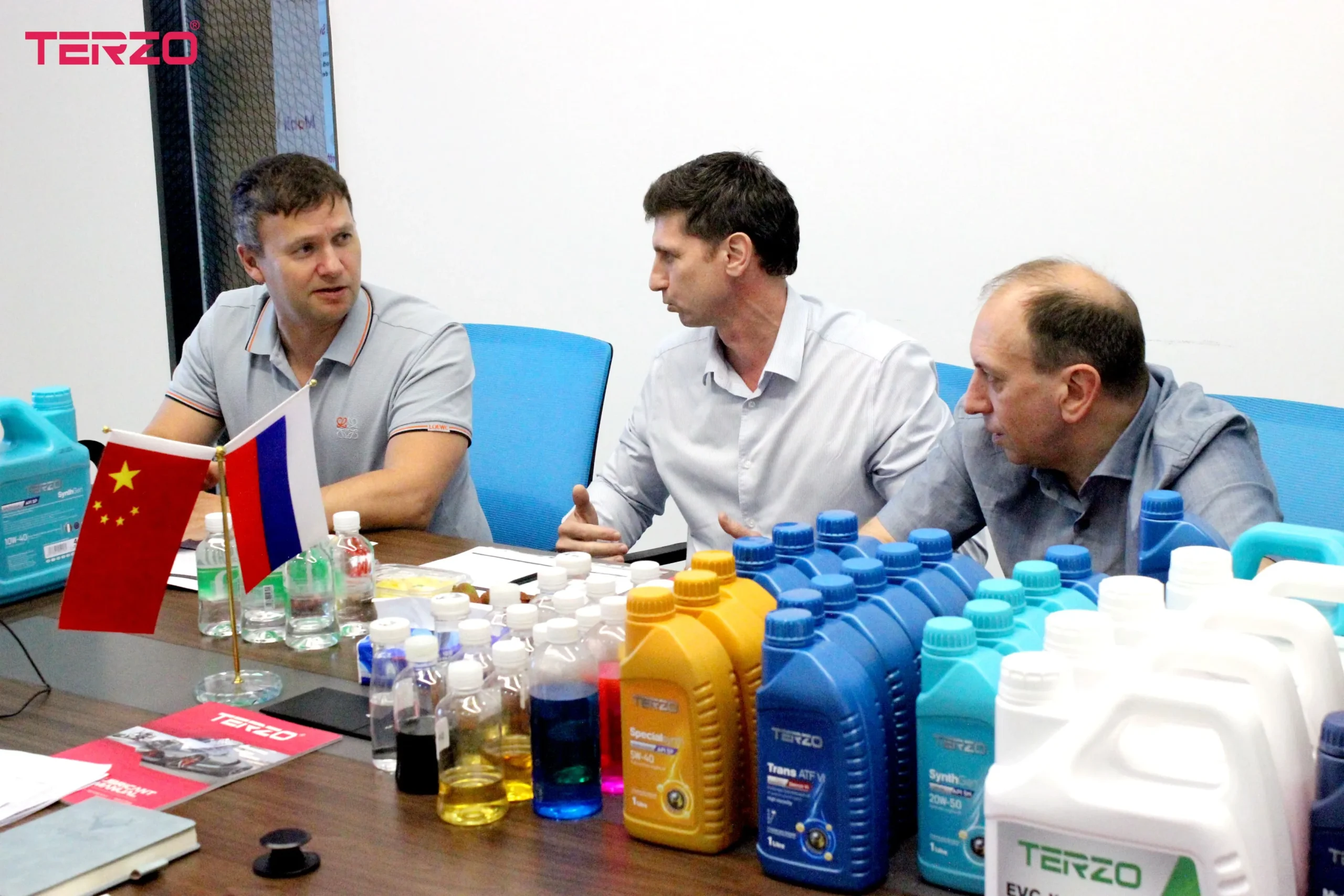
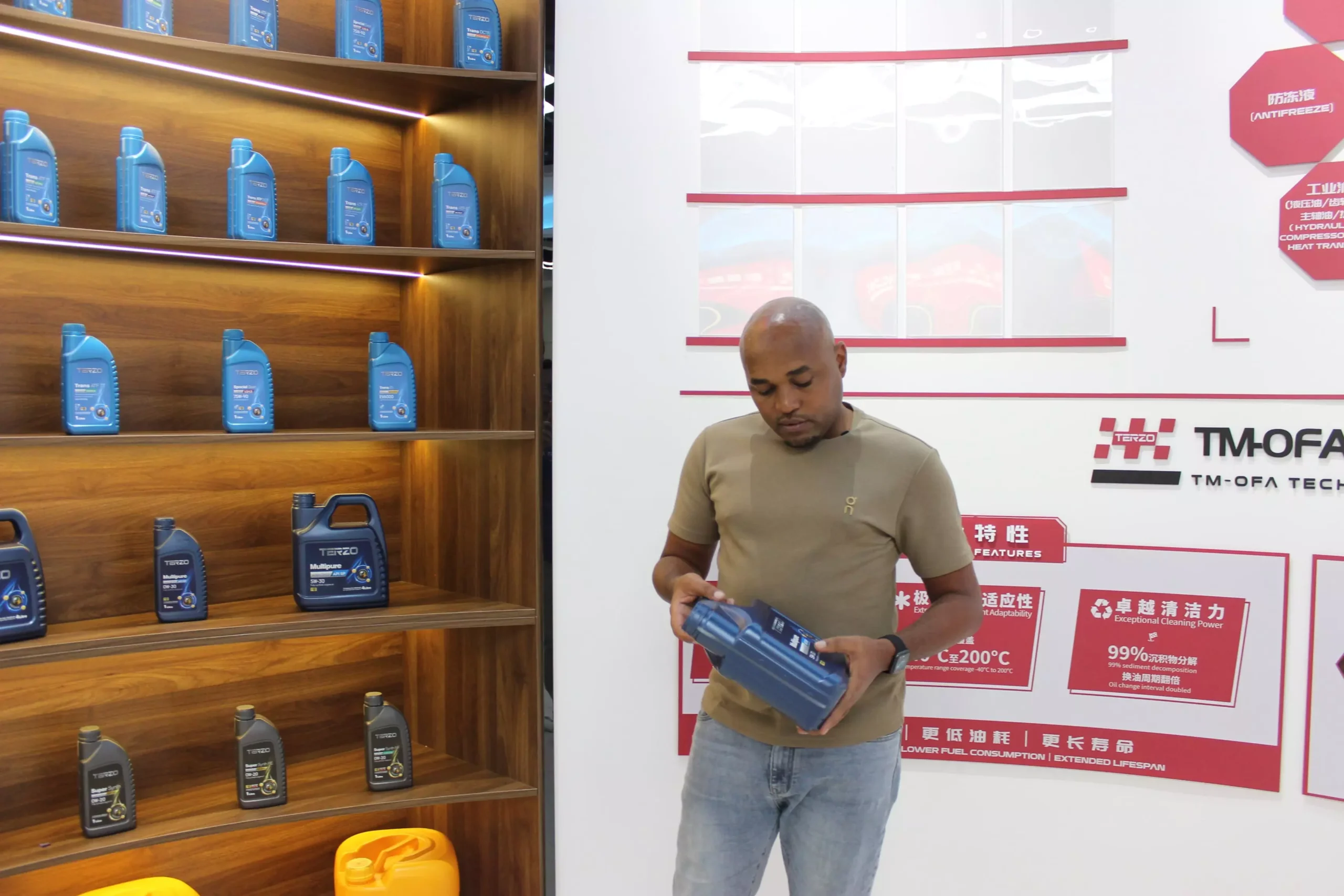
When planning a trial order, buyers can review the TERZO passenger car engine oil, 商用車引擎機油以及 motorcycle oil ranges to build a product mix suited to their target customers and sales channels.
6. What Kind of Lubricant Supports Long-Term Distributor Profit?
The most suitable lubricant for a distributor is not necessarily the most expensive one. It is the product that can support a stable commercial cycle—from the first order to market acceptance, repeat sales, and regular replenishment.
Each product series should have a clear role in the market. Its formulation, performance level, price, packaging, and sales channel should match a defined vehicle group, operating condition, and customer need.
An entry-level lubricant can be designed around cost control, but it still needs to provide the basic reliability expected by the market. This includes suitable engine protection, a stable formulation, consistent production batches, dependable packaging, and accurate technical documentation.
A well-positioned entry-level product is not simply a premium lubricant offered at a lower price. It is a product developed for a specific application and customer group, with a realistic balance between performance, price, and service expectations.
Consistency is particularly important for repeat business. Customers should be able to reorder the same product without having to question changes in appearance, packaging, technical data, or performance from one shipment to the next.
The commercial structure also needs to work for every part of the distribution chain. Importers, regional distributors, wholesalers, retailers, and workshops all require enough margin to stock, promote, recommend, and support the product.
When a lubricant can only be sold through repeated discounts, free stock, or short-term promotions, the problem may not be the product price alone. Its market positioning, channel strategy, or customer fit may also need to be reviewed.
For buyers managing several lubricant categories, it is usually more effective to build the range around actual market demand than to introduce a full catalogue at the beginning.
Buyers can review the TERZO 潤滑劑產品中心 and select a focused range based on local vehicle types, operating conditions, price segments, and sales channels. A smaller, clearly positioned range is often easier to explain, stock, sell, and replenish.
7. How TERZO Approaches Purchasing Cost and Channel Profit
TERZO does not treat purchasing cost as a competition to offer the lowest quotation. A low price may help secure a first order, but it does not by itself support stable sales, repeat purchasing, or long-term channel growth.
The aim is to help buyers build a product range that fits their market, can be supplied consistently, and remains practical to sell and replenish over time.
In practice, TERZO focuses on matching base oils and additive systems with the intended product positioning, while maintaining batch records, retained samples, and supporting documents such as TDS, SDS, and COA.
Product planning also considers local vehicle populations, climate conditions, price segments, packaging needs, and sales channels. This helps avoid introducing products that look complete in a catalogue but do not match actual market demand.
Consistency is equally important. Buyers need confidence that repeat shipments will remain stable in formulation, packaging, technical information, and product positioning.
For a new market, the more practical approach may be to begin with a focused selection of fast-moving viscosity grades and product categories. This allows the buyer to test market response, inventory turnover, and customer acceptance before expanding the range.
For established distributors, the priority may be different. It could involve improving replenishment planning, combining several product categories in one shipment, reducing slow-moving inventory, or developing a qualified second supply source.
TERZO’s approach is to combine suitable formulations, controlled production, clear market positioning, and practical supply planning. The purpose is not simply to reduce the unit price, but to help buyers manage the wider purchasing and operating risks that affect channel profit.

8. Ten Questions to Ask Before Purchasing Lubricants
Before comparing quotations or confirming a bulk order, buyers should ask a few practical questions about the product, production process, and repeat-supply system.
The purpose is not to request confidential formulation details. It is to confirm that the supplier can clearly explain what is being supplied, how quality is controlled, and whether the product can remain consistent over time.
What general base oil route is used in the product? The supplier should be able to explain the type and positioning of the base oil system without disclosing the complete formulation.
Is the additive system suitable for the intended performance level and application? The package should match the base oils, vehicle type, operating conditions, and expected service interval.
What technical evidence supports the claims shown on the label or product page? This may include licenses, OEM approvals, laboratory results, recognized performance data, or formulation records.
Can the supplier provide accurate TDS, SDS, and COA documents? The documents should correspond with the actual product, market version, and production batch being supplied.
Are production samples retained and linked to individual batches? Retained samples help both parties investigate later questions or compare repeat shipments.
Will the approved sample and bulk order use the same formulation? Buyers should confirm that the sample represents the product they will actually receive, rather than a separately prepared version.
How will significant raw-material or formulation changes be communicated? Buyers should understand whether changes that may affect performance, documentation, or approvals will be disclosed in advance.
How does the supplier maintain consistency between repeat orders? This may involve raw-material inspection, controlled blending, batch testing, filling checks, traceability, and retained samples.
How are product complaints investigated and resolved? A reliable process should identify the affected batch, review production records, examine retained samples, and provide a clear response.
Can the product support repeat sales, not only an attractive first order? Buyers should consider whether the product can maintain customer acceptance, channel confidence, inventory turnover, and regular replenishment over time.
Clear answers to these questions do not remove every purchasing risk, but they give buyers a more complete basis for comparing suppliers than unit price alone.
Conclusion: Purchase Cost Determines Investment; Stability Determines Return
A lower purchase cost is not necessarily a problem. When the price advantage comes from scale, automation, standardized packaging, efficient production, and better supply-chain management, it can help distributors improve competitiveness without reducing product reliability.
The concern is not whether a lubricant is inexpensive, but how the lower cost has been achieved.
When savings depend on weaker base oil selection, reduced additive-system support, limited testing, unreliable packaging, poor traceability, or insufficient after-sales support, the initial price advantage may be offset later in the sales cycle.
The buyer may spend less on the first shipment but lose margin through customer complaints, slower inventory turnover, additional discounts, weaker sales-team confidence, lower channel trust, and fewer repeat orders.
Purchase cost determines how much capital is required to bring a shipment into the market. Product consistency, supply reliability, and customer acceptance determine how effectively that capital produces a return.
For importers and distributors, the better purchasing decision is therefore not always the lowest quotation. It is the product and supplier combination that can support stable sales, manageable operating costs, and repeat business over time.
Compare Long-Term Profitability, Not Only Purchase Price
A suitable lubricant range should reflect the market in which it will be sold—not simply the number of products available in a catalogue.
TERZO works with importers, distributors, and OEM/ODM buyers to plan product ranges based on local vehicle populations, fast-moving viscosity grades, operating conditions, packaging requirements, target price segments, and sales channels.
The proposal can also cover trial-order selection, category combinations, technical documentation, packaging options, and replenishment planning, helping buyers evaluate both the initial purchase cost and the longer-term commercial potential of the range.
Contact TERZO for a Product and Supply Proposal tailored to your market.