
From Filling to Carton Sealing: Why Packaging Stability Matters in B2B Lubricant Supply
Packaging Is Part of the Product
When lubricant buyers evaluate a supplier, most attention naturally goes to formulation, viscosity grades, performance claims and price. But after production is finished, another part of the supply process becomes just as important: How the product is filled, sealed, labeled, packed and prepared for shipment.
For importers and distributors, these are not simply cosmetic steps. A loose cap can become a leaking carton. An incorrect label can create a warehouse or customer complaint. Weak cartons can arrive deformed after container transport. Inconsistent batch coding can make a simple product question difficult to trace.
That is why the lubricant factory packaging process should be considered part of overall supply reliability. A reliable B2B lubricant supplier is not only expected to produce the correct oil. It also needs to deliver the right product, in the right package, with the right identification and documentation—repeatedly.
1 Filling Process: Consistency Starts Before the Bottle Is Closed
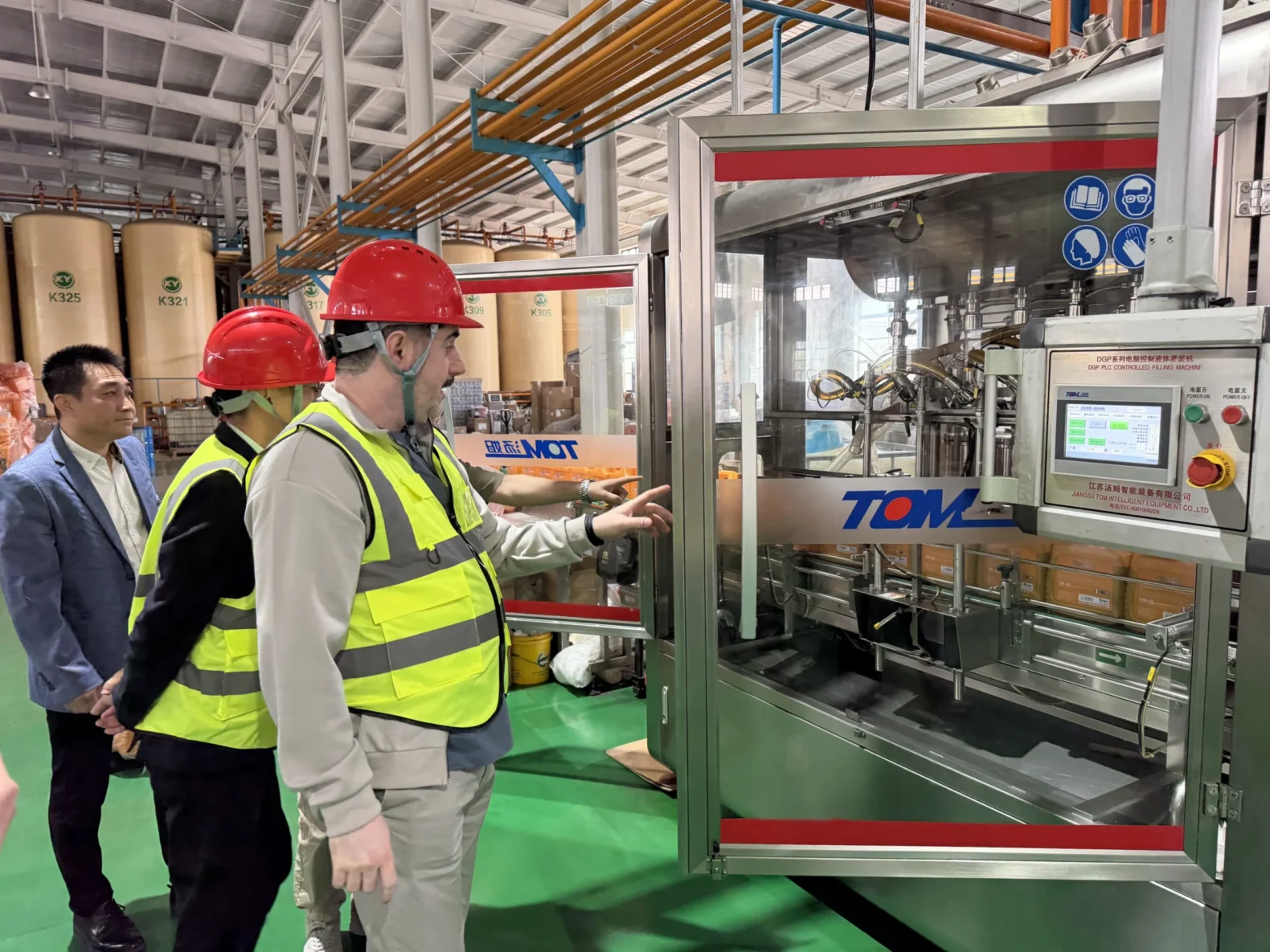
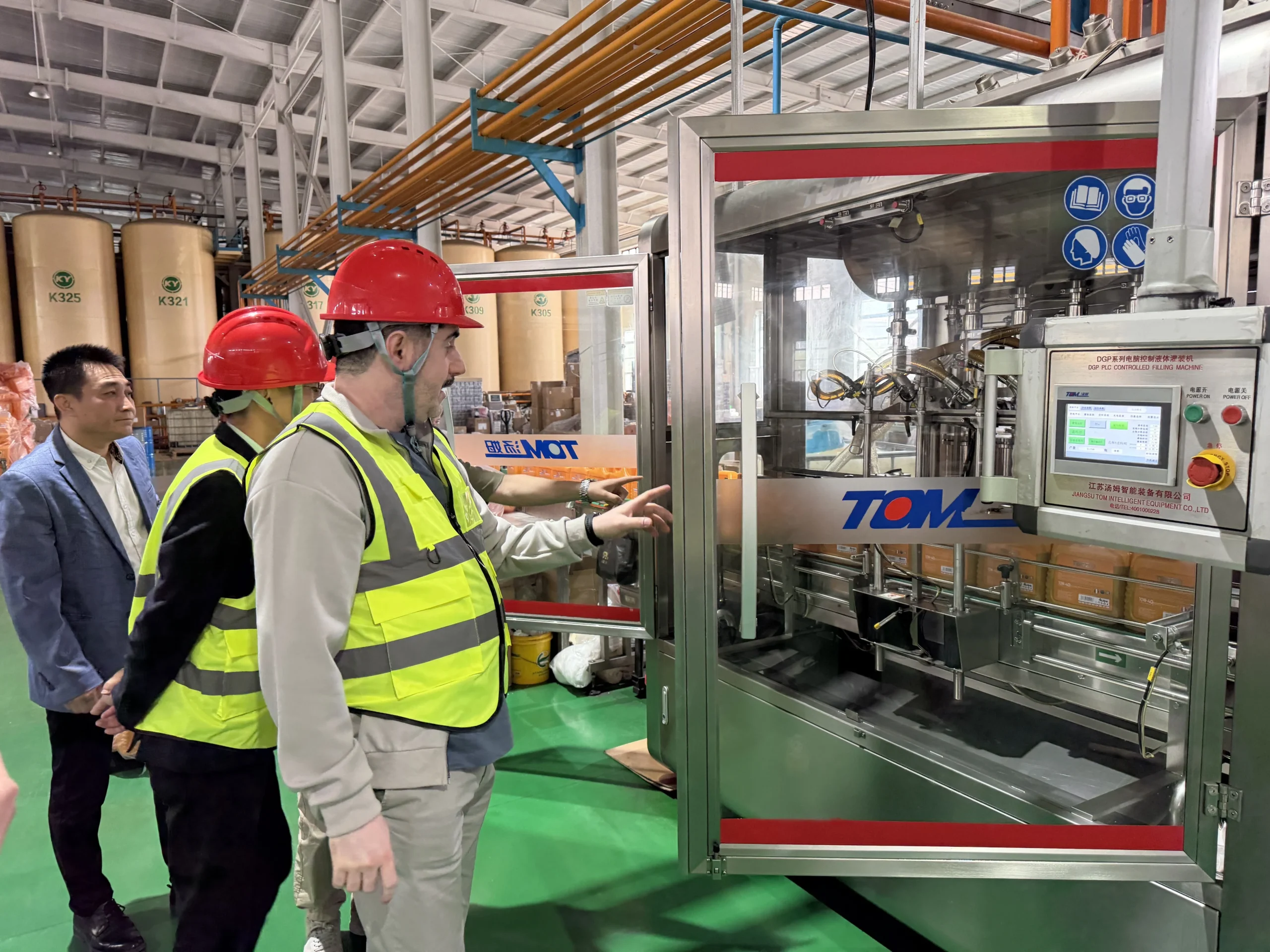
The filling stage connects finished lubricant production with the product that the customer actually receives. At this point, buyers should pay attention to more than whether the bottle appears full.
A stable filling process should help maintain:
- Correct product-to-package matching
- Consistent filling volume
- Clean filling conditions
- Clear batch identification
- Controlled product changeover
- Repeatable packaging appearance
A bottle labelled 5W-30 should not depend only on the label applied at the end of the line. Product identity needs to remain controlled from blending y storage through filling, coding y final packing.
Filling volume is another practical issue. Small variation may appear insignificant on a single bottle, but repeated across hundreds or thousands of cartons it can create discrepancies, customer questions and unnecessary after-sales work.
Modern packaging operations commonly connect filling, capping y coding so that the finished package remains traceable through production. Industry examples reported by Packaging World show how filling traceability can connect filling, capping, date coding and product records within the same packaging workflow.
For buyers, the point is not whether a factory uses the most sophisticated machine available.
The more important questions are:
- Is the correct product being filled into the correct package?
- Is filling volume controlled?
- Can the finished bottle be linked to its batch?
- Is product changeover managed clearly?
- Can the same specification be repeated on the next order?
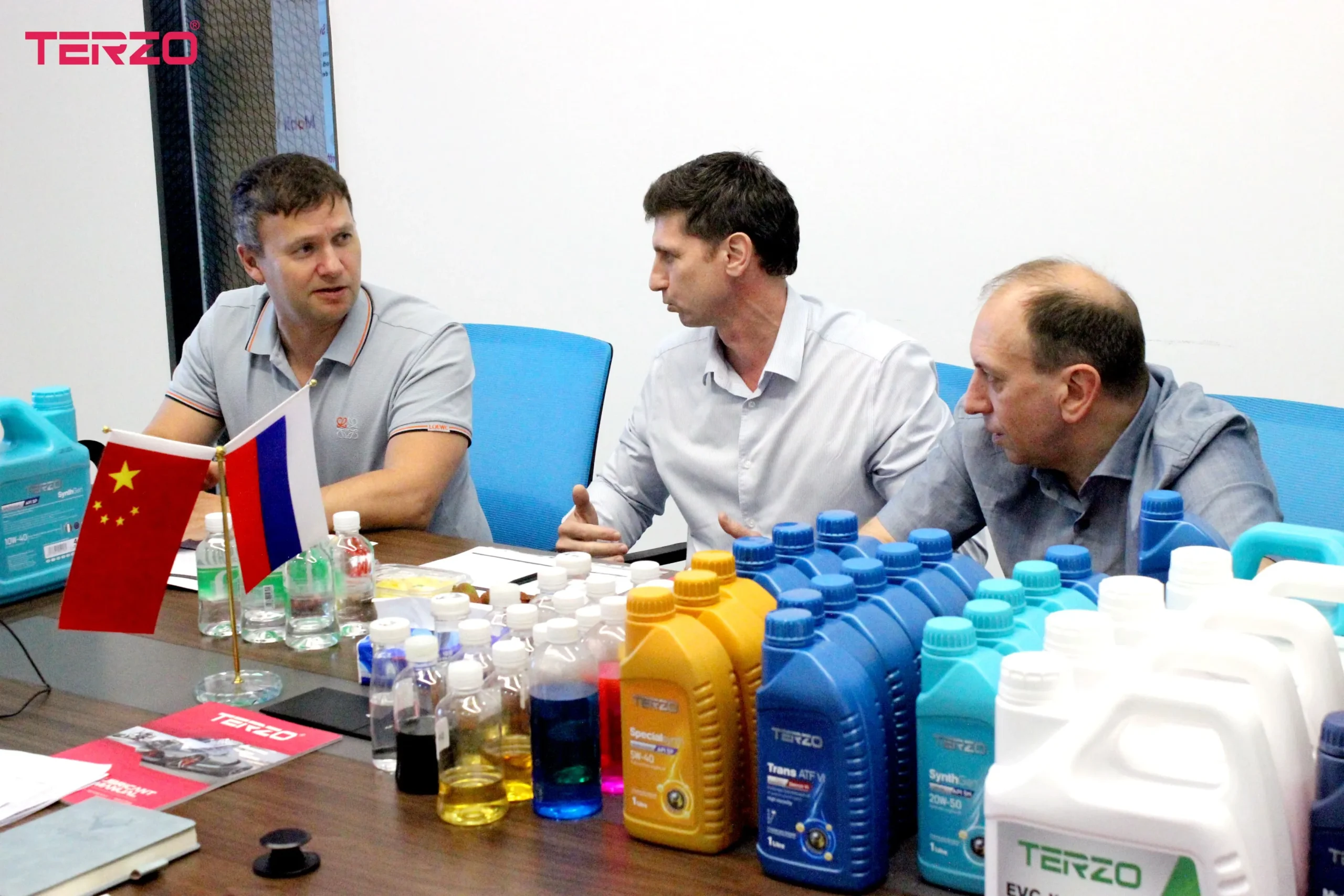
Buyers evaluating TERZO can review the Visita a la fábrica to see how raw-material handling, filling, quality control, packaging and logistics connect within the wider lubricant factory supply process. TERZO’s current factory page specifically shows filling, palletizing, quality-control, packaging and logistics stages. The objective is not to make the production line look impressive. It is to make sure that the product approved by the buyer is the same product that reaches the market.
2 Carton Sealing: Small Packaging Details Can Become Large B2B Problems
Once filling is complete, the next steps are often treated as routine. For distributors, however, these details directly affect how the product survives transportation y how customers perceive the brand.
2.1 Capping and Sealing
A cap must remain secure throughout the entire supply chain — from factory handling, pallet movementy container loading, through ocean freight y inland transport, to warehouse storage y retail handling. At any of these stages, a weak closure system can lead to leakage, even when the lubricante itself is of impeccable quality.
For the distributor, the outcome is the same regardless of the cause: damaged cartons, contaminated stock, returnsy customer dissatisfaction. This is precisely why bottle, cap, and seal compatibility must be regarded as an integral part of packaging quality — not as a separate or secondary concern.
2.2 Label Accuracy
Labels must precisely match the actual product being filled, accurately reflecting key details such as the product name, viscosity grade, performance level, packaging volume, batch information, market-specific language, and, where required, importer or distributor information.
This need for label control becomes even more critical in export orders y private-label projects, since different markets often demand distinct languages, legal information, o packaging versions. As a result, a simple packaging mistake can escalate far beyond a cosmetic issue — potentially disrupting customs clearance, complicating warehouse management, and undermining customer confidence.
2.3 Carton Sealing
Para B2B logisticsEl carton serves as the first real layer of protection, since distributors rarely receive products one bottle at a time — instead, goods move through the supply chain in cartons, pallets, and containers. This means cartons must be engineered to withstand stacking, palletizing, container loading, long-distance transport, warehouse storagey repeated handling.
However, a carton that appears acceptable when it leaves the filling line can still fail later on if its material, sealing, o stacking method is not properly suited for export transport — making structural reliability just as important as initial appearance.
Packaging quality should therefore be judged by how it performs through the supply chain, not only by how it looks at the factory.
3 Export Preparation: Packaging Must Survive the Entire Journey
For international lubricant buyers, the factory gate is only the beginning.
A shipment may move from the production site to a warehouse, then to a port, into a container, across the ocean, through customs, into another warehouse and finally into a regional distribution network.
Each movement creates additional stress on the packaging. This is why export preparation usually involves more than simply placing cartons on a pallet.
Effective pallet preparation hinges on several key considerations, including the carton stacking method, pallet stability, weight distribution, stretch wrapping, product orientation, batch separation, container space utilization, and adequate protection against movement during transport.
When done well, proper pallet preparation can significantly reduce movement y carton deformation during handling, while also helping importers organize receiving y inventory more efficiently. This becomes especially critical for mixed-product orders, where clear pallet and carton identification is essential to avoid confusion and ensure smooth logistics.
An importer may receive passenger car engine oil, heavy-duty diesel oil, motorcycle oil, gear oil or transmission fluid in the same shipment. If product identification is unclear, unloading and warehouse sorting become slower and mistakes become more likely.
Buyers planning mixed-product orders can review the Centro de productos lubricantes TERZO when building a more focused product mix for their market. For B2B supply, good export preparation has a simple purpose: The products that leave the factory in good condition should still be in good condition when the distributor opens the container.
4 Why Packaging Stability Matters to Importers and Distributors
Packaging may look like an operational issue. In reality, it affects several important commercial outcomes.
4.1 Fewer Claims and Replacements
Leakage, broken cartons, damaged labels, and incorrect packaging all translate into direct after-sales costs for distributors. Even when the engine oil itself meets every technical specification, a flawed lubricant packaging process can still force a distributor to replace stock — a cost that has nothing to do with the quality of the lubricant, and everything to do with weak lubricant production quality control.
4.2 Faster Warehouse Handling
Consistent cartons, clear labeling, and well-organized pallets — the result of disciplined lubricant pallet preparation — make receiving, counting, and storage significantly easier. For importers managing multiple viscosity grades and product categories, this level of lubricant batch consistency can meaningfully reduce unnecessary warehouse workload and streamline daily operations.
4.3 Higher Channel Confidence
Workshops, retailers, and wholesalers are quick to notice packaging consistency. When the same engine oil packaging arrives time after time with the same bottle, label, lubricant carton sealing, and overall presentation, the brand comes across as dependable — and that reliability reinforces customer confidence throughout the channel.
4.4 Better Repeat Orders
The first order tests whether a B2B lubricant supplier can deliver; repeat orders test whether that same standard can be delivered again. This distinction matters greatly to distributors. A supplier who frequently alters bottle design, carton quality, labeling details, or packing methods creates extra friction for the local market, whereas a stable lubricant factory supply process makes the second, fifth, and tenth order far easier to manage — a key factor in any serious B2B lubricant supplier evaluation.
4.5 Lower Total Supply Risk
B2B supply reliability is never the product of a single step — it emerges from a connected system: formulation → blending → filling → sealing → labeling → carton packing → lubricant pallet preparation → shipment. If any link in this chain proves unstable — particularly in lubricant export packaging — the resulting problem will eventually reach the buyer. This is precisely why packaging deserves serious consideration when evaluating a lubricant supplier, rather than being treated as an afterthought.
5 What Should Buyers Check During a Factory or Supplier Review?
When evaluating a lubricant factory packaging process, buyers do not need to inspect every machine in detail. A few practical questions can reveal a lot about whether a supplier truly has control over its process.
Q1: How is the correct lubricant matched with the correct bottle and label?
This confirms whether the supplier has safeguards in place to prevent mismatches between product, bottle, and label during production runs.
Q2: How is filling volume checked?
Understanding the verification method — manual, automated, or both — indicates the consistency level of the engine oil filling process.
Q3: How are caps and seals inspected?
This reveals whether closure quality is actively monitored or simply assumed, directly affecting leak-proof reliability during transport.
Q4: How are label versions controlled for different markets?
For export and private-label buyers, this shows whether the supplier can reliably manage multiple languages, legal requirements, and packaging versions without error.
Q5: How are cartons checked before palletizing?
This clarifies whether lubricant carton sealing and structural integrity are verified before cartons move further down the supply chain.
Q6: How are different products separated during mixed orders?
For distributors placing multi-SKU orders, this indicates how well the supplier prevents mix-ups and misidentification.
Q7: Can each finished product be traced to a production batch?
Traceability is central to lubricant batch consistency and is essential for quality investigations or recalls if issues arise.
Q8: How are damaged bottles or cartons handled before shipment?
This shows whether quality control catches problems before goods leave the factory, rather than leaving them for the buyer to discover.
Q9: How are pallets prepared for export transport?
This addresses whether lubricant pallet preparation accounts for the stresses of long-distance shipping, not just short-distance factory movement.
Q10: Can repeat orders maintain the same packaging specification?
This is often the most revealing question, since it tests long-term process stability rather than a one-time production result.
The purpose of these questions is not to make procurement unnecessarily complicated — it is to understand whether the supplier has a repeatable process. For B2B buyers, repeatability is often more valuable than an impressive one-time factory demonstration.